Matt Is Back. Patriot Plumbing is Locally Owned Once Again!

Can I Repair My Furnace Myself? What You Can Fix and When to Call a Pro
Many homeowners wonder if they can repair their furnace without hiring a professional. While some maintenance tasks are safe and easy to perform, others involve electrical components, gas connections, or combustion systems that carry serious risks. Missteps can void the manufacturer warranty, violate local building codes, or result in safety hazards.
This guide explains what furnace issues you can address yourself and which ones require a licensed HVAC technician. It covers tasks involving key components like the thermostat, ignitor, flame sensor, blower motor, and circuit board, and helps you understand the limits of DIY troubleshooting. If your furnace is showing signs of failure, this article will help you determine whether a basic fix is safe or if it is time to schedule a professional inspection.
Can You Legally and Safely Repair a Furnace Yourself?
Yes, homeowners are allowed to perform basic furnace maintenance tasks, such as changing air filters or adjusting thermostat settings. However, repairs involving gas lines, ignition systems, or electrical components must be done by a licensed HVAC technician to comply with local and national building codes.
Wenatchee and Washington state laws follow International Mechanical Code (IMC) and National Fuel Gas Code (NFPA 54) guidelines. These codes require licensing for repairs involving:
- Combustion safety components
- Gas valve adjustment or replacement
- Circuit board diagnostics or wiring changes
- Sealed combustion chamber access
Performing unlicensed work on these systems is not only illegal but also dangerous. Improper repairs can cause gas leaks, electrical fires, or exposure to carbon monoxide. Additionally, furnace manufacturers often state in their warranties that unauthorized repairs void coverage—even if damage is accidental.
If a part inside your furnace involves ignition, gas flow, or internal wiring, do not attempt to repair it yourself. Only routine exterior tasks like checking the thermostat or replacing the air filter fall within safe DIY limits. For all other furnace repairs, call a certified HVAC professional to ensure your safety and compliance with regulations.
What Furnace Repairs Are Safe for Homeowners to Do?
Homeowners can safely perform a few routine furnace maintenance tasks that do not involve internal components or fuel systems. These actions help maintain airflow, improve efficiency, and prevent unnecessary service calls.
The most common safe DIY tasks include:
Replacing the air filter: Air filters should be changed regularly to maintain airflow and prevent overheating. Most residential filters have a MERV rating between eight and thirteen and should be replaced every one to three months depending on usage and indoor air quality.
Resetting the circuit breaker: If the furnace loses power, resetting the breaker at the electrical panel may restore function. This does not involve opening the furnace or working with live wires.
Checking thermostat batteries and settings: If the thermostat is unresponsive, replacing the batteries may resolve the issue. Also verify that the setpoint temperature is higher than the current room temperature and that the mode is set to heat.
Cleaning around the furnace: Removing dust, pet hair, and debris from around the exterior of the unit helps prevent airflow blockages and keeps return air pathways clear.
Opening supply and return vents: Closed or blocked vents can create pressure imbalances that affect heating performance. Make sure all vents are open and unobstructed in every room.
These tasks are safe, require no tools beyond basic household items, and do not violate any code requirements or warranty terms. They are also a good first step before calling a technician for more complex issues.
DIY vs Professional Furnace Repairs Table
| Task | DIY Safe? | Notes |
| Replace air filter | ✅ Yes | Every thirty to ninety days |
| Reset thermostat or breaker | ✅ Yes | Low risk, easy to check |
| Clean flame sensor | ⚠️ No | Misalignment or damage risk |
| Replace ignitor | ❌ No | High voltage and combustion risk |
| Repair blower motor | ❌ No | Involves electrical and mechanical parts |
| Adjust gas valve | ❌ No | Requires license and carbon monoxide testing |
What Furnace Repairs Should Only Be Done by a Professional?
While some tasks are safe for homeowners, most furnace repairs involve components that require professional expertise, certification, and testing tools. These systems involve gas combustion, high voltage circuits, and pressure-sensitive controls that must be handled with precision.
Repairs that must be performed by a licensed HVAC technician include:
Flame sensor replacement: If the furnace cannot confirm ignition, the flame sensor may need to be cleaned or replaced. Misalignment or damage during DIY attempts can prevent the burner from staying lit.
Ignitor replacement: Furnace ignitors carry a high voltage load during startup. A cracked or malfunctioning ignitor must be tested and replaced using proper tools and safe handling practices.
Blower motor testing or repair: Blower assemblies control airflow and must be removed carefully to avoid damaging internal mounts or belts. Technicians also test capacitors, bearings, and voltage levels.
Control board diagnosis: Circuit boards receive signals from the thermostat and sensors. Testing board function requires electrical meters and system knowledge to avoid damage or misdiagnosis.
Gas valve or pressure switch adjustments: Only licensed professionals should test or replace gas valves. Incorrect adjustments can lead to combustion failure, gas leaks, or carbon monoxide exposure.
Attempting these repairs without proper training carries serious risks. Potential outcomes include:
- Carbon monoxide leaks from incomplete combustion
- Electrical fires from faulty wiring or tool misuse
- Furnace lockout if safety sensors detect repeated ignition failure
These components are regulated under residential mechanical and fuel gas codes. For your safety, always leave internal furnace repairs to a certified HVAC technician.
Why DIY Furnace Repair Can Be Risky
Attempting to repair a furnace without professional training exposes homeowners to multiple safety and system risks. While changing a filter or checking the thermostat is safe, internal repairs can create serious hazards.
One of the most common risks is electrical shock. Furnaces contain capacitors that store electrical charge. Even when the power is turned off at the breaker, these components can release enough energy to cause injury if touched without proper discharge procedures.
A second risk is failing to recognize a cracked heat exchanger. This issue cannot be detected by visual inspection alone and may allow carbon monoxide to leak into the home. Professional tools and combustion analysis are needed to identify it.
The limit switch is another sensitive component. If it is uncalibrated or faulty, it may fail to detect overheating conditions. This can result in system damage or a complete shutdown triggered by safety protocols.
Gas-related repairs carry the most serious consequences. An improper adjustment to the gas valve or pressure switch can lead to incomplete combustion or gas leaks. Without a manometer or leak detection equipment, these errors can go unnoticed until damage occurs.
Lastly, most furnace manufacturers clearly state that DIY repairs void the equipment warranty. Even replacing one internal part without proper documentation can result in denied warranty claims for future issues.
For these reasons, internal furnace repairs should only be done by a licensed HVAC technician who understands combustion safety, local code requirements, and electrical diagnostics.
What to Do Before Calling a Furnace Technician
Before scheduling a service appointment, homeowners can check a few basic items that may resolve the issue without requiring professional repair. These steps also help the technician diagnose the problem faster if a visit is needed.
Start by checking the thermostat mode. Make sure it is set to heat and that the setpoint temperature is above the current room temperature. If the thermostat is battery-powered, replace the batteries to ensure reliable signal transmission.
Next, inspect the air filter. A clogged filter restricts airflow and can cause the furnace to overheat and shut down. Replace the filter if it is dirty or past its recommended service interval.
Then, walk through the home and check each vent register. Make sure all supply and return vents are fully open and not blocked by furniture, rugs, or curtains. Poor airflow can affect system performance and create false shutdowns.
Finally, try a system reset. Turn off the furnace at the breaker panel, wait for one minute, then restore power. This can reset internal electronics and clear minor error codes.
Completing these checks ensures you have ruled out simple issues. If the furnace continues to malfunction after these steps, call a certified HVAC technician to perform a full diagnostic.
When Should You Call a Professional Furnace Repair Technician?
Some furnace problems can only be diagnosed and repaired by a licensed HVAC technician. If you notice any of the following symptoms, stop troubleshooting and schedule professional service.
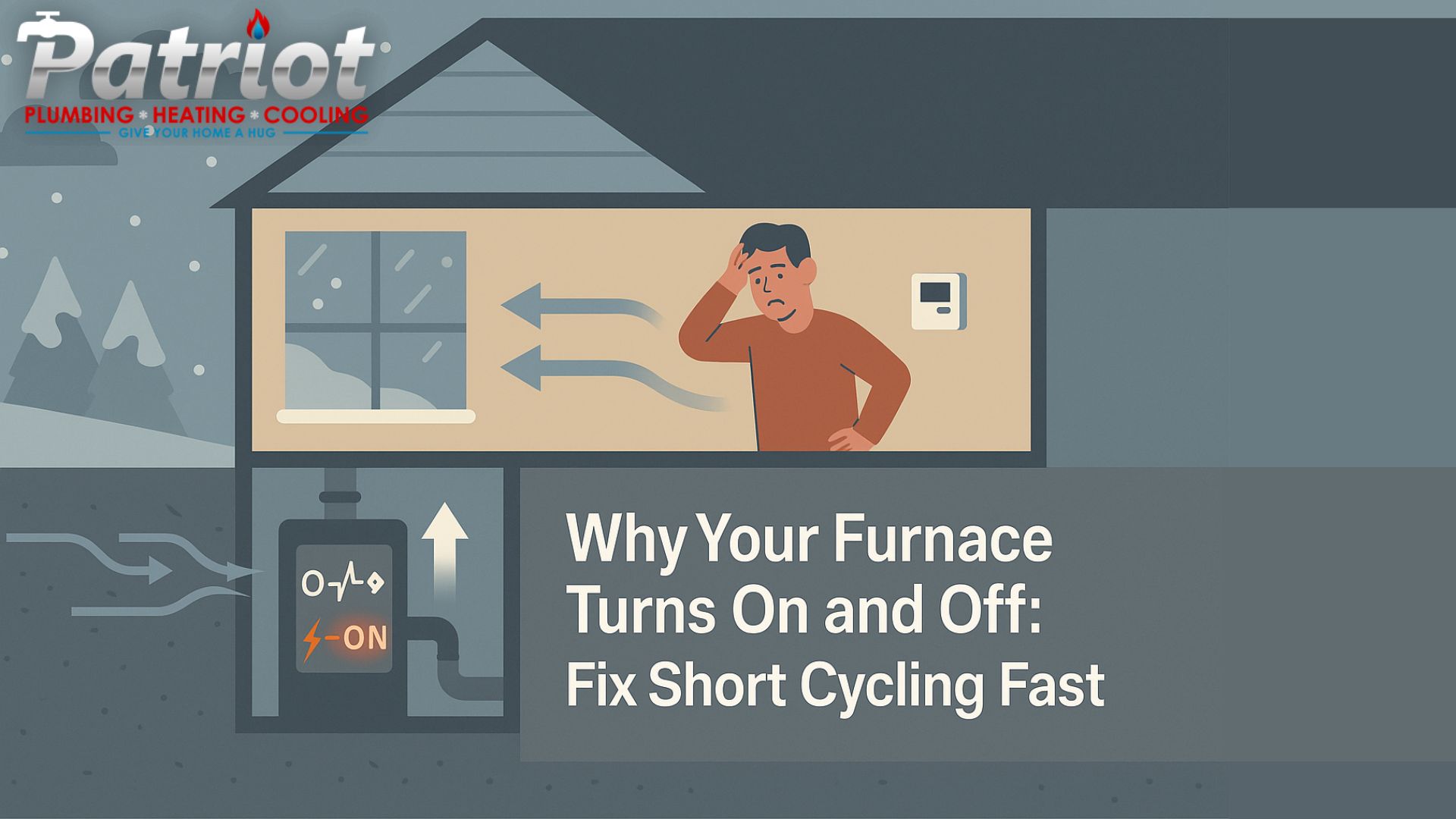
If the furnace cycles repeatedly or turns on and off in short intervals without heating the space, this may indicate an airflow restriction, overheating issue, or control board error.
If the burner does not ignite after multiple attempts, it could point to a failed ignitor, gas valve issue, or sensor malfunction. Repeated failed ignition attempts can trigger system lockout.
If you feel cold air blowing from the vents even though the thermostat is calling for heat, the furnace may have a safety shutdown or ignition failure.
Unusual smells such as burning dust, gas, or a metallic odor may indicate electrical problems, combustion issues, or blower failure. Do not ignore persistent or strong odors.
If your furnace displays flashing lights, error codes, or if the thermostat shows a fault message, this suggests a system-level failure that requires diagnostics.
These issues are outside the scope of homeowner repair and may involve gas safety, combustion controls, or electrical testing.
✅ Patriot Plumbing, Heating & Cooling Inc. provides licensed furnace repair in Wenatchee with fast diagnostics, safety compliance, and same-day appointments.
Conclusion
Some furnace issues are simple and safe to resolve on your own. Tasks like replacing the air filter, resetting the breaker, or adjusting thermostat settings fall within the range of homeowner maintenance.
However, most furnace repairs involve internal components, electrical systems, or gas combustion parts that require licensed expertise. DIY attempts on these systems can lead to safety hazards, void warranties, and fail to solve the problem.
If your furnace is short cycling, blowing cold air, or displaying errors, call a certified HVAC technician to inspect the unit and perform a code-compliant repair.
For long-term safety, efficiency, and peace of mind, professional service is the best solution for most furnace issues.
Built on Experience, Chosen with Confidence